MemoHoney Official Website › Articles › Ingredient histories
Ingredient historiesHow Citrulline Reached A Memory Label
Citrulline arrived on memory labels from blood-pressure and sports research, without a memory trial of its own.
The route is the same for most of this shelf: a real absorption finding, a real outcome in another population, and then a bridge built on mechanism rather than on data.
An odd ingredient to find on a memory label
Citrulline is a watermelon compound that spent most of its research career in two places: hospital nutrition, where it is a marker of intestinal function, and the sports aisle, where it is sold by the scoop to people hoping to do one more repetition.
It now appears on memory labels, including this one, twice over: once as the hydrochloride and once bound to malic acid. That is a considerable migration for a single molecule, and it happened without a trial of citrulline in people worried about their memory.
This article is about how an ingredient makes that journey, because the route is the same for most of the shelf and knowing it is worth more than knowing about any one compound.
What follows is information about a dietary supplement and not advice about anybody's health. Forgetfulness somebody else has remarked on, or a decline that is visibly steeper this month than last, is a reason to book an appointment rather than to read further. MedlinePlus lists what is worth mentioning when you do.
Step one: a real pharmacological finding
The migration always starts somewhere genuine, and here it starts with a problem in a different ingredient.
Arginine is the substrate an enzyme converts into nitric oxide, the gas that relaxes blood vessels. The trouble is that swallowed arginine mostly does not arrive: enzymes in the gut wall and the liver take a large share of an oral dose before it reaches the general circulation, which is what the labelled-meal work followed through the body.
Citrulline solves that neatly. It is absorbed largely intact, passes the liver, and is converted to arginine at the kidney. Human work on citrulline availability established how much can be given, and later pharmacokinetic work characterised the conversion step by step. Gram for gram it raises plasma arginine more reliably than arginine itself does.
That is a solid, uncontroversial finding, and it is the engine of everything that follows.
Step two: an outcome in a real population
A pharmacological finding is not a selling point until it moves an outcome, and citrulline's outcome is blood pressure.
A 2025 systematic review and meta-analysis of citrulline supplementation and watermelon intake in middle-aged and older adults reported a modest reduction in blood pressure. A 2019 review in Nutrients covering both arginine and citrulline reaches a compatible place. Neither effect is dramatic, and both are genuine.
Alongside that sits the exercise literature, which is where the volume of trials is. Citrulline malate, the form on this label, is the one those trials mostly used: three days of it before repeated sprints, a pilot setting 8 g against 12 g, and a small trial in physically active older women which gave 3 g a day alongside six weeks of training.
Note the amounts in every one of those. Three grams is the smallest, and it arrived beside supervised exercise.
| Trial | Who | How much | What was measured |
|---|---|---|---|
| Cerebrovascular function | Taekwondo athletes, sprint intervals | 8.8 g a day for five days | Blood flow to the head during exercise |
| Blood pressure meta-analysis | Middle-aged and older adults | Gram-scale, pooled across trials | Systolic blood pressure |
| Repeated sprint performance | Male team-sport athletes | 8 g a day for three days | Sprint repeatability |
| Dose comparison pilot | Trained individuals | 8 g against 12 g, acutely | Resistance exercise performance |
| Older-adult pilot | Physically active older women | 3 g a day for six weeks | Lower-limb function |
Five trials, five populations, and not one of them measured memory in people who were worried about it.
Step three: the jump to a new category
Here is where the migration happens, and it happens in a single sentence that nobody has to write down.
The brain takes about a fifth of the body's oxygen budget at rest. An organ that hungry is plausibly the first to notice when delivery is sluggish. Therefore an ingredient that improves delivery might help an organ that depends on it. Therefore a memory label.
Every step of that is reasonable and the conclusion is a hypothesis rather than a finding. The nearest thing to a test is one trial that measured cerebrovascular function directly, at 8.8 g a day for five days, in taekwondo athletes during sprint interval training. It is a real measurement of blood flow to the head and it is a long way from a capsule taken at breakfast by somebody in their fifties.
What has not happened, for citrulline or for the finished formula it sits in, is a randomised trial with a cognitive outcome in the population that buys it. That is not a scandal. It is the ordinary state of this whole shelf, and it is why the one large, long, properly powered trial in this field is still the most instructive thing in it: after decades of encouraging smaller studies, ginkgo produced no reduction in dementia across more than three thousand older adults followed for a median 6.1 years.
Read the MemoHoney label with this beside you
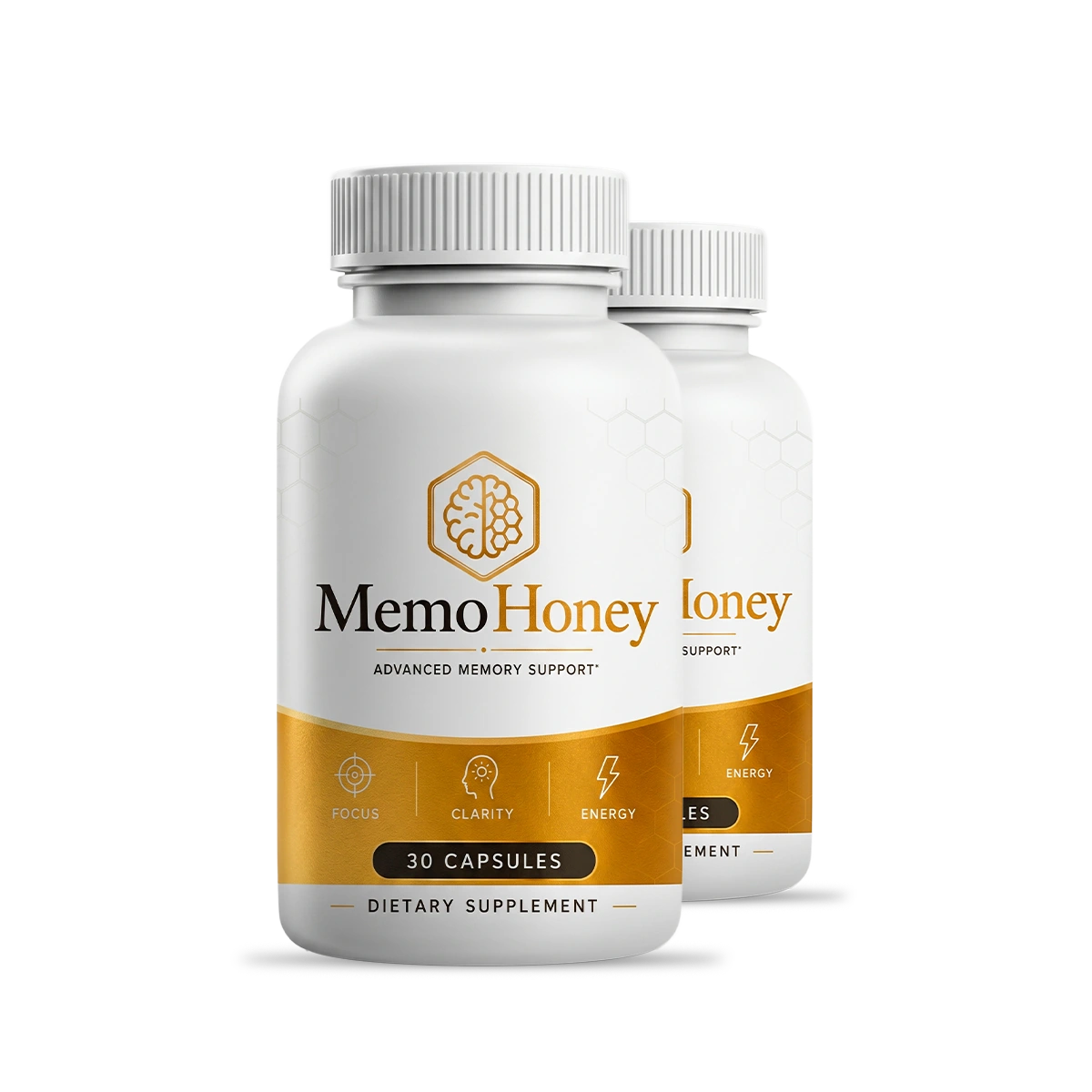
Six named ingredients, the amount each published trial used printed next to them, and 60 days from the date of purchase to decide.
Two bottles $158 · six bottles $294 · 60-day money-back guarantee
Take Me To The MemoHoney CheckoutRun MEM-26/ME-5895 · a single capsule each morning · thirty in every bottle · posted within the U.S.
What the migration costs in evidence
Three things are quietly lost when an ingredient crosses categories, and all three are worth naming because they are invisible on a label.
The population changes. A result in athletes during sprint intervals is a result under conditions of high demand and high flow. Whether it generalises to a sedentary fifty-five-year-old at breakfast is an empirical question that nobody has answered.
The outcome changes. Blood pressure, arterial stiffness and flow velocity are not memory. The distance between a vascular measurement and a cognitive one can be enormous, which is exactly what the one large trial that treated blood pressure hard and then measured dementia was built to find out.
And the amount changes, usually by an order of magnitude. Every trial in the table above is written in grams. A capsule holds well under one gram in total, and this one shares that space between six ingredients.
The same route, walked by half this shelf
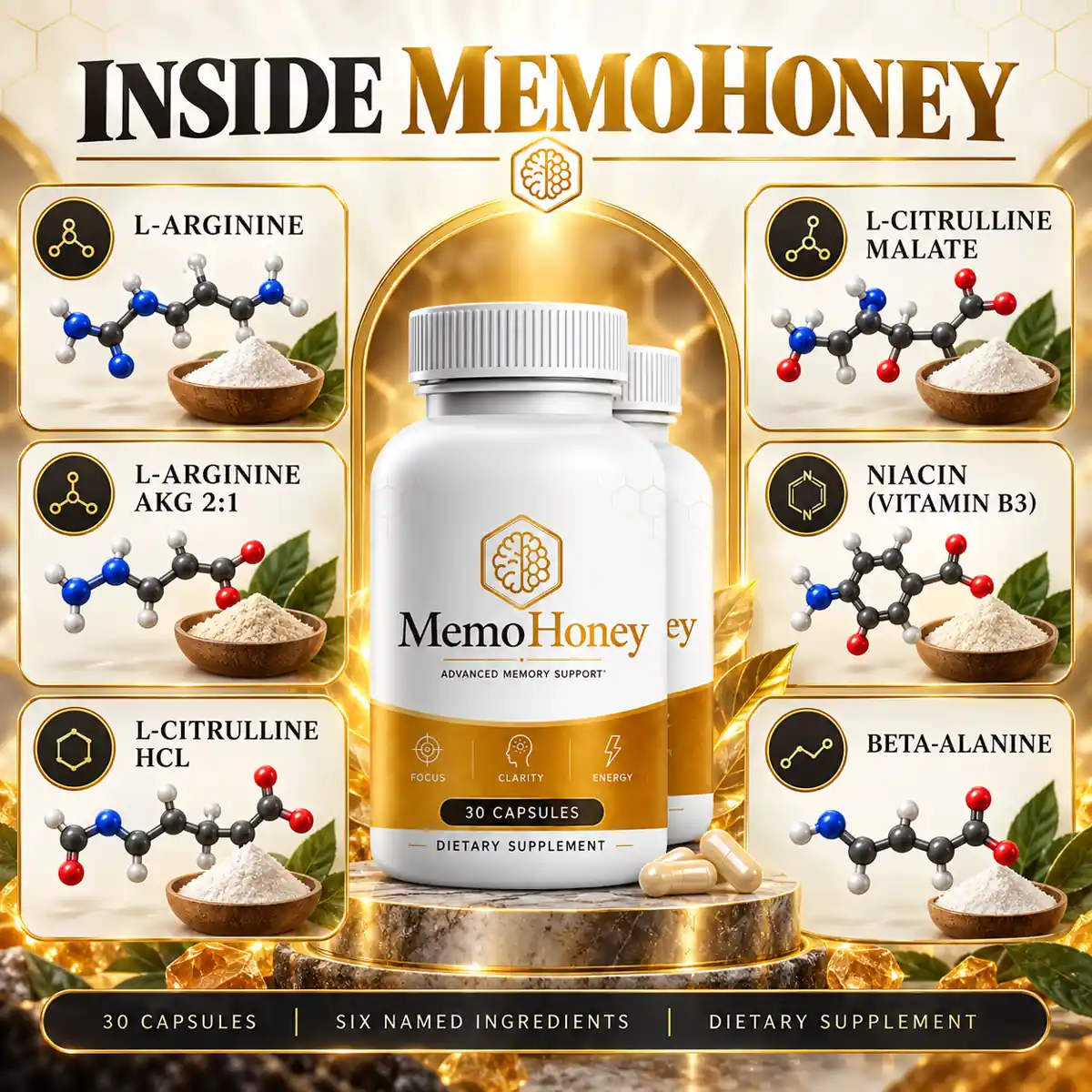
Citrulline is the clearest case because its paper trail is unusually tidy, but the route is not unusual. Three other ingredients on this bottle reached it the same way.
Arginine AKG came out of the pre-workout aisle, where it was sold on the theory that the salt survives absorption better than plain arginine. Its trials are pharmacokinetic and performance trials in trained young men, at 12 g a day, and a single 3 g dose before one session moved nothing that was measured.
Beta-alanine came from the same aisle by an even longer route: it raises muscle carnosine, carnosine buffers acid, and acid buffering helps a set of squats. The bridge to a brain label is that carnosine is also present in brain tissue, and one imaging trial in older adults reported a change in a white-matter measurement.
Niacin travelled the other way entirely, from vitamin deficiency research. Severe deficiency causes pellagra, whose third classical symptom is dementia, and a large dietary cohort reported that the lowest intakes carried the highest rate of incident Alzheimer's disease. That is a real observation about deficiency and it is not an argument that more is better in somebody who is not deficient.
- A real pharmacological finding, usually about absorption or delivery
- A real outcome, in a population somebody was already studying
- A plausible bridge to a second category, built on mechanism rather than data
- A label, with the ingredient named and the amount undisclosed
- A buyer reading a trial result across a gap the label gives no way to measure
How to read an ingredient that has migrated
Not with contempt, which is the easy response and usually the wrong one. The chemistry underneath this migration is real, the absorption advantage of citrulline over arginine is well established, and a formula built on it is a more thoughtful thing than a formula built on whatever was cheap.
Read it as a hypothesis with an unknown dose. That is the accurate description, and it leads somewhere useful: find the trial amount, compare it with what a capsule can hold, and decide what you think the residue is worth. The comparison table on this website does the first two of those for all six ingredients on this label.
And hold the alternative in view. A plain daily multivitamin, which nobody markets with a mechanism, has two randomised trials reporting memory benefits in older adults. The unglamorous option is often the better-evidenced one in this field, and a website selling the glamorous one is the right place to say so.
A good molecule, a long way from home
Citrulline is not a bad ingredient and its presence on this label is not a trick. It is a well-understood compound with a genuine absorption advantage, a modest blood-pressure effect at gram amounts, and one trial that measured blood flow to the head in athletes.
What it does not have is a memory trial, and what this label does not have is a number. Those two absences together are the honest summary of why a watermelon compound ended up on a memory bottle, and of how far anybody should carry a sports-nutrition result across.
The mechanism page follows the rest of the pathway, and the fit page sets out who should be looking at something else entirely.
- Read for this counter: Kinetics of the utilization of dietary arginine for nitric oxide and urea synthesis: insight into the arginine-nitric oxide metabolic system in humans, as reported by Mariotti F and team in Am J Clin Nutr, 2013;97(5):972-9 [PubMed 23535108]
- Read for this counter: Manipulation of citrulline availability in humans, as reported by Rougé C and team in Am J Physiol Gastrointest Liver Physiol, 2007;293(5):G1061-7 [PubMed 17901164]
- Read for this counter: Quantitative characterization of L-citrulline as a precursor of L-arginine in rats: pharmacokinetic basis for nitric oxide-mediated effects, as reported by Song S and team in Front Pharmacol, 2026;17:1889835 [PubMed 42755674]
- Read for this counter: Does l-citrulline supplementation and watermelon intake reduce blood pressure in middle-aged and older adults? A systematic review and meta-analysis of randomized controlled trials, as reported by Luo P and team in Clin Nutr ESPEN, 2025;69:653-664 [PubMed 40789388]
- Read for this counter: The Effects of Oral l-Arginine and l-Citrulline Supplementation on Blood Pressure, as reported by Khalaf D and team in Nutrients, 2019;11(7):1679 [PubMed 31336573]
- Read for this counter: Effects of 3 days of citrulline malate supplementation on short-duration repeated sprint running performance in male team sport athletes, as reported by Faria VS, Egan B in Eur J Sport Sci, 2024;24(6):758-765 [PubMed 38874989]
- Read for this counter: The Comparative Effect of Acute Moderate- and High-Dose Citrulline Malate on Resistance Exercise Performance in Trained Individuals: A Double-Blind Randomised Controlled Pilot Trial, as reported by Gough LA and team in J Funct Morphol Kinesiol, 2026;11(1):19 [PubMed 41900522]
- Read for this counter: Short-term citrulline malate supplementation enhances lower-limb function in physically active older women: A pilot randomized controlled trial, as reported by Ramos-Hernández R and team in Clin Nutr ESPEN, 2026;74:103356 [PubMed 42162613]
- Read for this counter: The effects of L-citrulline supplementation on cerebrovascular function during sprint interval training in taekwondo athletes, as reported by Li A, Li H, Chen J in J Exerc Sci Fit, 2025;23(3):222-228 [PubMed 40474881]
- Read for this counter: Ginkgo biloba for prevention of dementia: a randomized controlled trial, as reported by DeKosky ST and team in JAMA, 2008;300(19):2253-62 [PubMed 19017911]
- Read for this counter: Effect of Intensive vs Standard Blood Pressure Control on Probable Dementia: A Randomized Clinical Trial, as reported by Williamson JD and team in JAMA, 2019;321(6):553-561 [PubMed 30688979]
- Read for this counter: Multivitamin Supplementation Improves Memory in Older Adults: A Randomized Clinical Trial, as reported by Yeung LK and team in Am J Clin Nutr, 2023;118(1):273-282 [PubMed 37244291]
- Agency page: Memory, issued by MedlinePlus, U.S. National Library of Medicine [medlineplus.gov]