MemoHoney Official Website › Sources and corrections
Editorial standardsMemoHoney Sources and Corrections: How the Memohonaey Desk Works
Prepared by the MemoHoney Team, Memohonaey · Reviewed for medical accuracy by Dr. Neelum Aggarwal, MD · Last revised
Every MemoHoney fact on this counter is traced to the bottle artwork, the seller’s own page, a U.S. health agency or a PubMed record, in that order of trust.
The MemoHoney Team writes each page and Dr. Neelum Aggarwal, MD reviews it for medical accuracy. When a reader shows a page is wrong, the sentence is rewritten where it sits and the revision date moves. Memohonaey earns a commission on orders, and the pages say so.
Twelve parts: the desk, the sources, the review, the limits and the corrections route.
Who writes and who reviews MemoHoney pages at Memohonaey
Memohonaey is the official U.S. MemoHoney shop, run from 810 Seventh Avenue in New York. It sells MemoHoney through the seller’s own checkout. It did not develop the formula, it does not make the capsules and it does not print the label, and every page says so. What it does is describe the product carefully enough that a buyer can check each line before paying.
The MemoHoney Team is the counter’s editorial desk. It works from the bottle artwork, the ingredient tile graphic and the seller’s page, and it looks every ingredient up in U.S. government sources and PubMed before writing about it.
Dr. Neelum Aggarwal, MD, a physician, then reviews the draft for medical accuracy. The reviewer is named under each page title and on the review card at the foot of the page, and the about page sets out the role. Pages written before the review began are brought into it as they are revised.
The order of trust for MemoHoney facts
When two sources disagree, the higher one on this list decides, and the page names which one it followed.
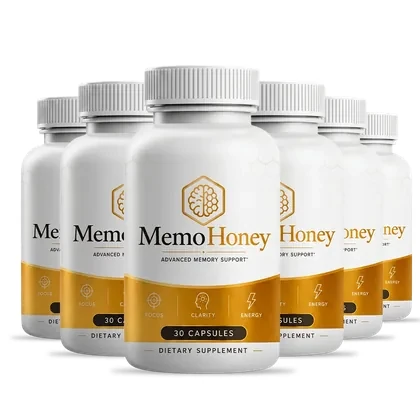
- The bottle artwork. The front label, the six-tile ingredient graphic and the one line of directions: one capsule a day with water, preferably in the morning before a meal. If your bottle differs from a page here, trust the bottle and tell the desk.
- The seller’s page. The price ladder of $158, $207 and $294, the 60-day window counted from purchase, the thirty days of use the seller asks for, the Park Avenue returns address and the refund timing, each with the date it was read.
- U.S. health agencies. The NIH Office of Dietary Supplements on niacin and on supplements generally, MedlinePlus and the National Institute on Aging on memory and dementia, and the FDA and FTC on what supplement marketing may claim.
- PubMed records. Single-ingredient trials of citrulline, arginine, beta-alanine and niacin, each quoted with the dose, the participants and the outcome. None tested MemoHoney itself, and the pages that cite them say that.
Lookalike “official” sites, marketplace listings and paid press releases sit below all four. They may prompt a check; they are never the evidence.
How a MemoHoney page is built, from the bottle up
- Quote the bottle. Every label line a page depends on is copied exactly, not paraphrased.
- Date the terms. Prices, pack sizes, postage and the refund window come from the seller’s page with the reading date beside them.
- Source each ingredient. A government page or a PubMed record is linked at the point where the ingredient is discussed.
- Answer first. The page answers its own question in plain English before it adds detail.
- Medical review. Dr. Neelum Aggarwal, MD reads the draft for accuracy and safety, especially doses, interactions and anything to do with memory loss or dementia.
- Publish and date. The page goes up with the reviewer named and a revision date that changes only when the content does.
If a price, a label line or a safety source changes later, the part of the page that relied on it goes back through the same steps.
What the medical review of MemoHoney pages checks
The review reads the product copy, the label notes, the ingredient and safety sections, the FAQ answers and the journal. It asks three things of each page: does it agree with the artwork and the cited source, is any safety point missing or too quiet, and does any sentence promise more than the label allows.
What the review is not matters as much. It is not the reviewer’s recommendation of MemoHoney, it is not a promise that the capsule will help your memory, and it is not advice about your own health. Those questions belong with a clinician who knows you.
MemoHoney claims we print and claims we leave alone
The bottle reads Advanced Memory Support, and its gold band names focus, clarity and energy. The seller’s page talks about memory, focus and mental clarity. Those are the benefits these pages describe, and always as goals the capsule is made to support.
- No page calls MemoHoney a treatment for memory loss, dementia, Alzheimer’s disease or any condition.
- No page says the finished capsule has been tested in a trial, because no such trial has been published.
- No page credits the capsule with a milligram figure that the artwork supplied to this counter does not show.
- No page treats the FDA-registered facility emblem as approval of the product; the FDA does not approve supplements before sale, as its supplement questions and answers explain.
- No page names a date by which you should notice a change.
Those limits follow the FTC’s guidance on health products, which asks for competent and reliable scientific evidence behind any health claim.
Safety rules on every MemoHoney page
- Changing memory that is new, getting worse or noticed by others is sent to a doctor before anything else, with MedlinePlus and the National Institute on Aging as sources.
- Sudden symptoms, from confusion to slurred speech or one-sided weakness, are named as stroke warning signs with the instruction to call 911.
- Vessel-active medicines. Because arginine and citrulline act on blood vessels, readers on blood-pressure medicine, nitrates or blood thinners are asked to check with the prescriber.
- Niacin. The 35 mg adult upper limit for supplemental niacin is repeated wherever dose comes up, citing the NIH niacin fact sheet.
- Age and pregnancy. Pages repeat that the label is written for adults and ask pregnant or nursing readers to see their doctor first.
How MemoHoney prices and doses are worked out here
Some numbers on this counter are sums, and each is labelled as one. A day of MemoHoney costs about $2.63 on two bottles ($158 for 60 capsules), $2.30 on three ($207 for 90) and about $1.63 on six ($294 for 180).
The trial columns print what each cited study gave its participants, with who they were and how long they took it. They are never a stand-in for the amount in one MemoHoney capsule, which the artwork supplied here does not show; where that figure is missing from the artwork, the column says so and stays empty.
How Memohonaey earns money from MemoHoney
Memohonaey earns a commission on orders placed through the order buttons on this website. Those links are tagged as sponsored and open the seller’s checkout, where you pay the listed price: $79 a bottle for two, $69 for three and $49 for six, with free U.S. postage from three bottles up.
That commission is why this method is public. Anyone can check whether the pages lean toward the sale: the cautions, the lower-scored buyer reports and the open questions stay in place whether or not they help an order.
How MemoHoney ratings and buyer reports are shown
The 4.5 score, the 1,027 written reviews, the 5,689 orders and the 91% recommendation figure are the distributor’s. The desk did not collect them and cannot test them against real orders, so wherever they appear they are labelled as the distributor’s, and the three-star reports sit beside the five-star ones.
The editorial score on the home page is the desk’s own reading, given line by line with reasons, and it is labelled as the desk’s view rather than a customer rating.
What the MemoHoney pages refuse to do
- Decide for you whether MemoHoney suits you; only a clinician who knows your history can.
- Suggest starting, stopping or changing any prescription, or taking more than one capsule a day.
- Take an order by phone or email. Orders go through the order buttons only, and the order line listed in the footer looks after tracking, changes and refunds once you have bought.
- Print a quote, a credential or a study the desk cannot trace back to where it came from.
Correcting a MemoHoney page: the route and the dates
Each page shows its revision date under the title and on the review card, and the same date is in the page’s structured data. The date moves only when the content moves: a new price, a corrected figure, a new safety source.
To report a mistake, use the contact page or the website mailbox listed in the footer. Name the page, quote the line and, if you can, link the source that shows it is wrong. The desk checks the point against the artwork or the cited source, rewrites the sentence where it sits and moves the date; anything touching a dose, a direction, a price or a safety note is reviewed again before it goes live.
Orders, parcels and refunds go to the order line, not the website mailbox, as the refund policy sets out.
Questions about MemoHoney sources and corrections
Does the medical review mean the physician backs MemoHoney?
No. It checks that the page is accurate and that nothing important about safety is left out, for a general reader. It is not an endorsement and not advice for you personally.
Does Memohonaey manufacture MemoHoney?
No. Memohonaey is the official U.S. shop that sells MemoHoney and writes these pages; the brand and its distributor own the formula and the label.
Where does the 4.5 score come from?
From the distributor, together with the review count, the order count and the buyer quotes. The pages mark them as the distributor's because the desk cannot verify them.
How long does a correction take?
The desk checks a report against the artwork or the source as soon as it is read. A confirmed error is rewritten where it sits and the date moves; dose, price and safety changes are reviewed again first.
Could the commission tilt the pages?
This page exists so you can judge that. The cautions and open questions stay in place whether or not they help an order.
Why do some MemoHoney label columns stay empty?
The artwork supplied to this counter shows the six ingredient names without figures. Rather than guess, the pages print the doses the cited trials used and label them as trial doses.