MemoHoney Official Website › Articles › Method
MethodMemoHoney Before and After: How To Run A Fair Sixty-Day Test
A MemoHoney before and after has to be your own, because no trial of the capsule has been published. The distributor says buyers waited 3 to 6 weeks. The fair way to measure it is a simple test: write three specific things down on day one, change one variable, and read them again at thirty and sixty days, before the refund window counted from payment closes.
Why most people cannot tell whether it worked
Two months after starting a supplement, most people have a feeling rather than an answer. The feeling is usually mildly positive, it is held with more confidence than it deserves, and it would have been the same feeling whatever was in the capsule.
That is not stupidity. It is what happens when an expensive purchase, a variable outcome and an unreliable memory of how things used to be are put together and left for sixty days. Cognitive complaints are especially bad for this, because the thing you are trying to assess is the thing doing the assessing.
The fix is cheap and it takes one minute on day one. This article is that minute, written out.
What follows is information about a dietary supplement and not advice about anybody's health. Forgetfulness somebody else has remarked on, or a decline that is visibly steeper this month than last, is a reason to book an appointment rather than to read further. MedlinePlus lists what is worth mentioning when you do.
Before the first capsule
Three decisions, all made before anything is swallowed. Every one of them is harder to make honestly once the bottle is open.
Decide what you are measuring. Not better memory, which is not a measurement. Pick three specific, countable things: how often a name arrives late in conversation, how long you hold attention on one task before reaching for a phone, and what your afternoons feel like between two and four. Write them on a piece of paper with today's date.
Decide when you will judge it. Thirty days is the earliest fair point on this product, because the distributor states a typical wait of 3 to 6 weeks and nothing on its published roster reports anything before day 15. Sixty days is the better point, and it is also when the refund window closes.
Decide what would make you stop early. An unexpected reaction that persists. A new prescription for a nitrate or a blood-pressure medicine, which is the one interaction worth raising on the side effects page. Or simply having missed more mornings than you took, which means the test has already failed.
| Day | What happens | Why that day |
|---|---|---|
| 0 | The order is paid for | The refund window starts here, not at delivery |
| Arrival | Open the bottle the same week | Transit has already spent part of the window |
| 1 | Write down three specific things | Day sixty needs something to be compared against |
| 1 to 30 | One capsule each morning, missed days marked | Adherence is the commonest reason a test is worthless |
| 30 | First honest reading against the three lines | Also roughly when the seller's use clause is satisfied |
| 60 | Second reading, and the window closes | Decide, and telephone the same week if the answer is no |
Two of those dates belong to the seller and four belong to the buyer. The four are the ones that decide whether the answer is worth having.
The two months themselves
Change one thing. That is the whole method and it is the part people find hardest, because a decision to take a supplement very often arrives in a week when somebody has also decided to sleep more, drink less coffee and start walking. All of those are good ideas and every one of them contaminates the result.
Sleep is the biggest confounder by a distance. Memory consolidation during sleep is among the better-established findings in cognitive neuroscience, and a fortnight of short nights will flatten next-day recall more than anything on this shelf could raise it. If sleep is the variable that moved, the notebook should say so.
Caffeine is the quiet one, because it is invisible to the person changing it. It has a faster and more reliable effect on sustained attention than any ingredient in this category, and people who start a focus supplement adjust their coffee in one direction or the other about half the time. Write down the cups.
Mark the days you miss. Not to feel bad about them, but because six missed mornings in a month means a different bottle was tested than the one on the label.
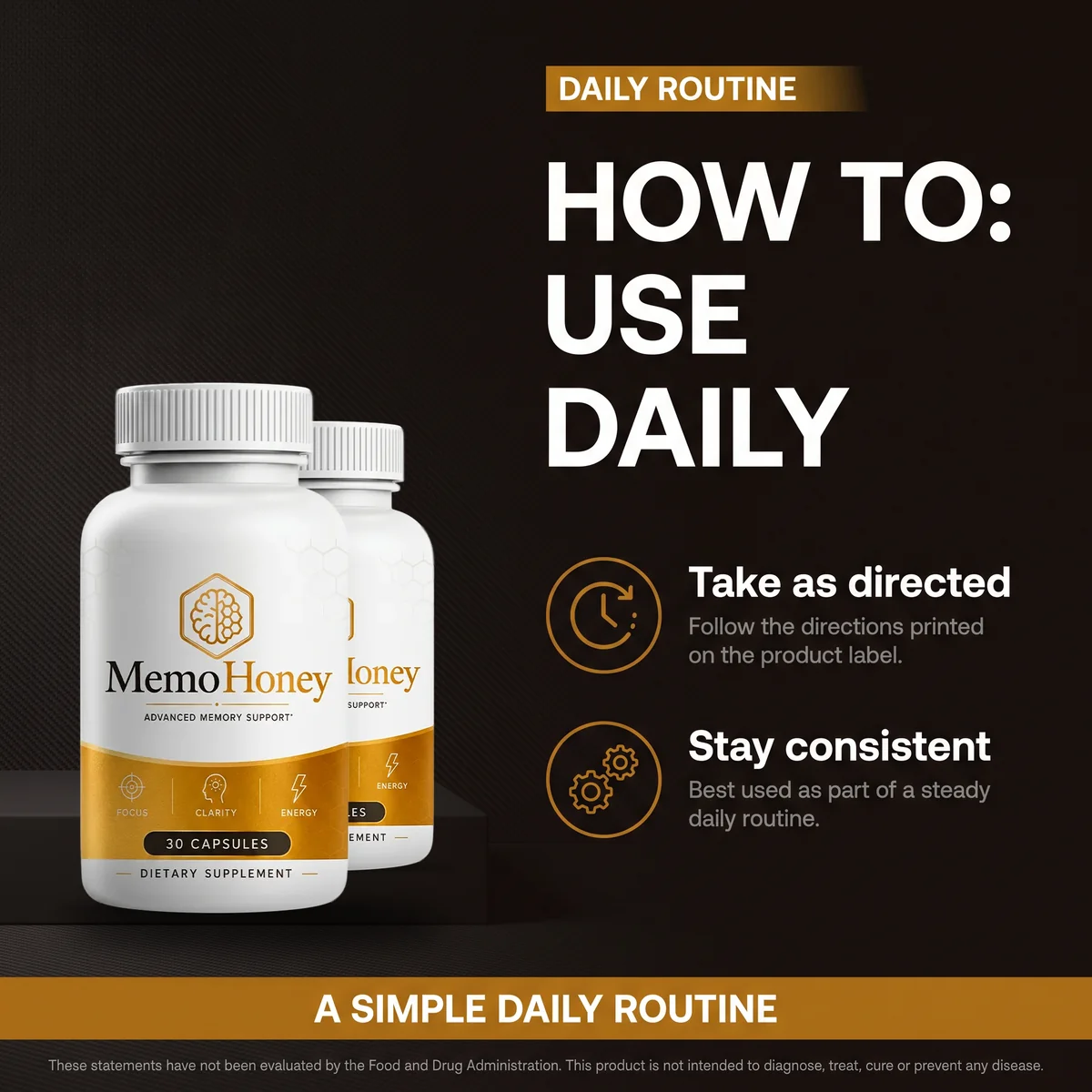
The thirty-day reading
Read your three lines. Do not read them charitably.
The question is not whether you feel better. It is whether any of the three specific things you wrote down has moved in a way you would defend to somebody sceptical. Names arriving late: fewer, the same, or more. Attention: longer, the same, shorter. Afternoons: different or not.
Then look at the confounders you wrote down beside them. If sleep improved in the same month, the honest answer is that you cannot separate the two, and that is a real answer rather than a failure. If nothing else changed and nothing moved, that is also a real answer.
Thirty days is also, on this product, roughly when the seller's thirty-day use clause is satisfied, which means a claim becomes available at about the same moment the first honest reading does. That timing is not an accident and it is worked through on the guarantee page.
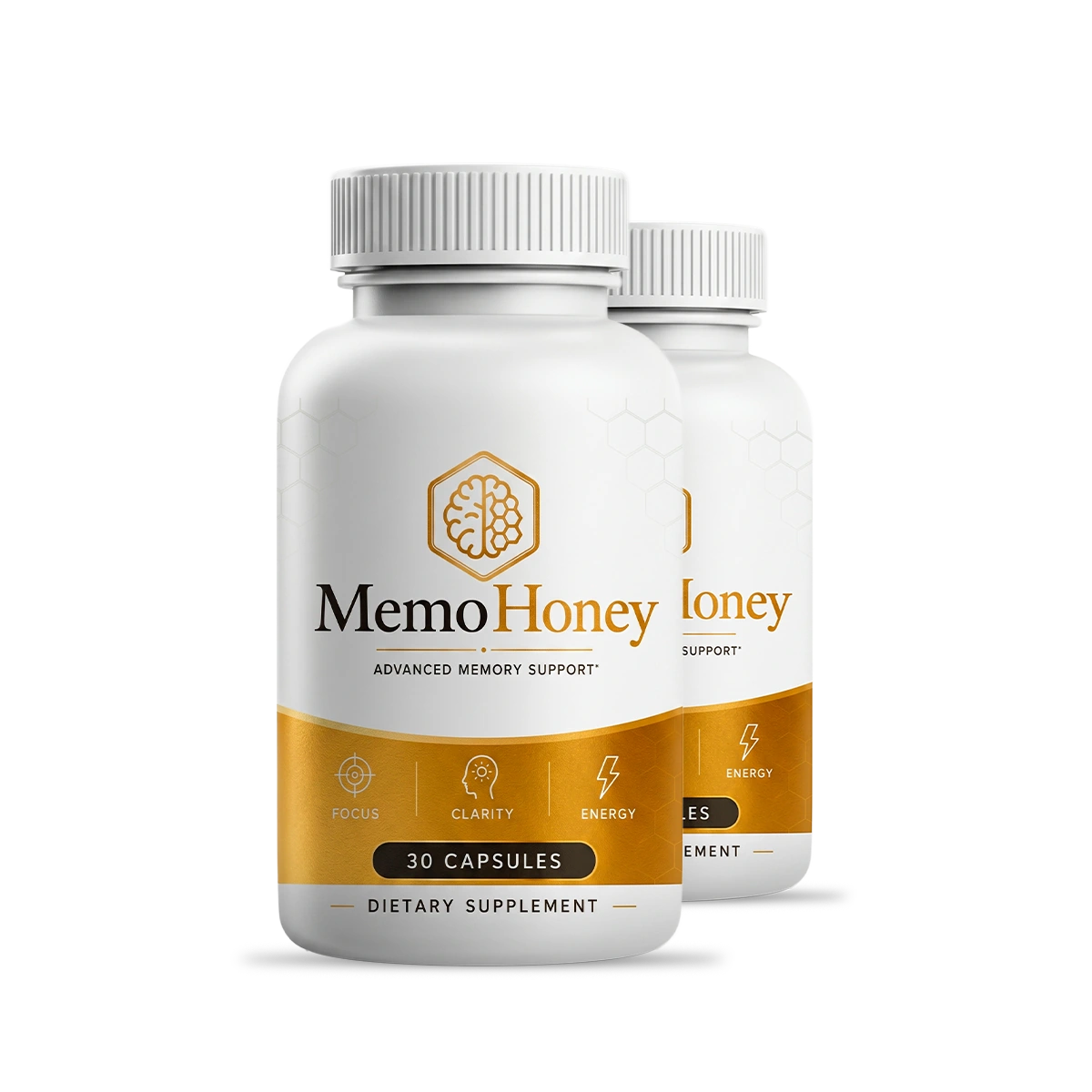
Read the MemoHoney label with this beside you
Six named ingredients, the amount each published trial used printed next to them, and 60 days from the date of purchase to decide.
Two bottles $158 · six bottles $294 · 60-day money-back guarantee
Take Me To The MemoHoney CheckoutRun MEM-26/ME-5895 · a single capsule each morning · thirty in every bottle · posted within the U.S.
The sixty-day reading, and the decision
Read the same three lines again, then decide, and do it before the window closes rather than after.
Three outcomes are possible and all three are useful. Something moved and the confounders were quiet, in which case a second bottle is a reasonable purchase. Nothing moved, in which case the claim goes in by telephone with the order ID while there is still time. Or something moved and something else changed too, in which case the honest move is to hold the other variable steady and give it another month, knowing that the money is no longer refundable.
That third outcome is the common one and it is worth planning for. It is also the reason the two-bottle rung exists in a useful place on this ladder: sixty capsules is sixty days, which is the same length as the window, so the entry rung is the only one whose entire supply is refundable. The pricing page does that arithmetic for all three.

The four ways a self-test goes wrong
Worth naming, because each one has an obvious fix and none of them is obvious in advance.
The first is measuring a feeling. Better is not a measurement and neither is sharper. Three countable things written down on day one is the whole defence, and the counting matters more than the choosing.
The second is judging too early. A fortnight of nothing on a product whose own distributor states a wait of 3 to 6 weeks is not a result. Most people who conclude a supplement did nothing concluded it in week two.
The third is changing three things at once, which is the commonest and the most sympathetic. Somebody deciding to take their cognition seriously generally decides several other sensible things in the same week, and every one of them is a rival explanation.
The fourth is forgetting the calendar. The refund window on this product runs sixty days from purchase, and somebody still deliberating on day sixty-two has made their decision without noticing.
- Write three specific, countable things on day one, with the date.
- Change one thing at a time, and write down anything else that changes anyway.
- Mark the mornings you miss, so adherence is a fact rather than an impression.
- Read at thirty days and again at sixty, against what you wrote.
- Decide before the window closes, not after it.
- Treat an inconclusive result as a result, because it usually is one.
This works on anything, not just a capsule
The method has nothing to do with this product and everything to do with making a decision you can defend. It works identically on a different supplement, on a change in sleep schedule, on cutting the afternoon coffee, or on the thing with the best evidence in this whole field.
That thing, on the current literature, is not a capsule. ACHIEVE reported slower cognitive decline in older adults with hearing loss who were given hearing intervention. SPRINT MIND reported fewer cases of probable dementia under intensive blood-pressure control. Neither is sold here and both would show up in exactly the same notebook.
Which is the argument for keeping one. A person who has run three sixty-day tests on three different things, properly, knows more about their own cognition than any product page will ever tell them.
One minute, on the first morning
Three lines, a date, and a note of anything else that changed. That is the whole apparatus, and it is the difference between an answer and a feeling at the end of two months.
It costs nothing, it is not specific to this bottle, and it is the single most useful thing anybody reading a supplement website can be told. The results timeline sets the same calendar out week by week for this particular product.
- Read for this counter: Sleep and memory consolidation: Neural and cognitive perspectives, as reported by Yasser E and team in Prog Brain Res, 2026;299:137-176 [PubMed 42547206]
- Read for this counter: Hearing intervention versus health education control to reduce cognitive decline in older adults with hearing loss in the USA (ACHIEVE): a multicentre, randomised controlled trial, as reported by Lin FR and team in Lancet, 2023;402(10404):786-797 [PubMed 37478886]
- Read for this counter: Effect of Intensive vs Standard Blood Pressure Control on Probable Dementia: A Randomized Clinical Trial, as reported by Williamson JD and team in JAMA, 2019;321(6):553-561 [PubMed 30688979]
- Agency page: Memory, issued by MedlinePlus, U.S. National Library of Medicine [medlineplus.gov]
- Agency page: Using Dietary Supplements Wisely, issued by National Center for Complementary and Integrative Health, National Institutes of Health [www.nccih.nih.gov]