MemoHoney Official Website › Articles › Labels and claims
Labels and claimsWhy The Bottle And The Sales Page Never Quite Match
The container is the conservative surface and the sales page is the broad one, and the gap between them is structural.
One is regulated, permanent and expensive to change. The other is written to answer the question a visitor arrived with. Reading the bottle first changes how the page reads.
Two surfaces, two sets of rules
Put a supplement's container next to the web page selling it and the two rarely say quite the same thing. The page is usually broader, warmer and more specific about outcomes. The container is shorter, flatter and more careful.
That gap is not evidence of dishonesty. It is the predictable result of two surfaces governed by different rules and written by different people for different purposes, and knowing which is which changes how a buyer should read both.
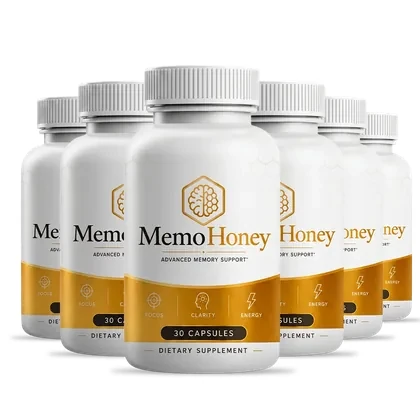
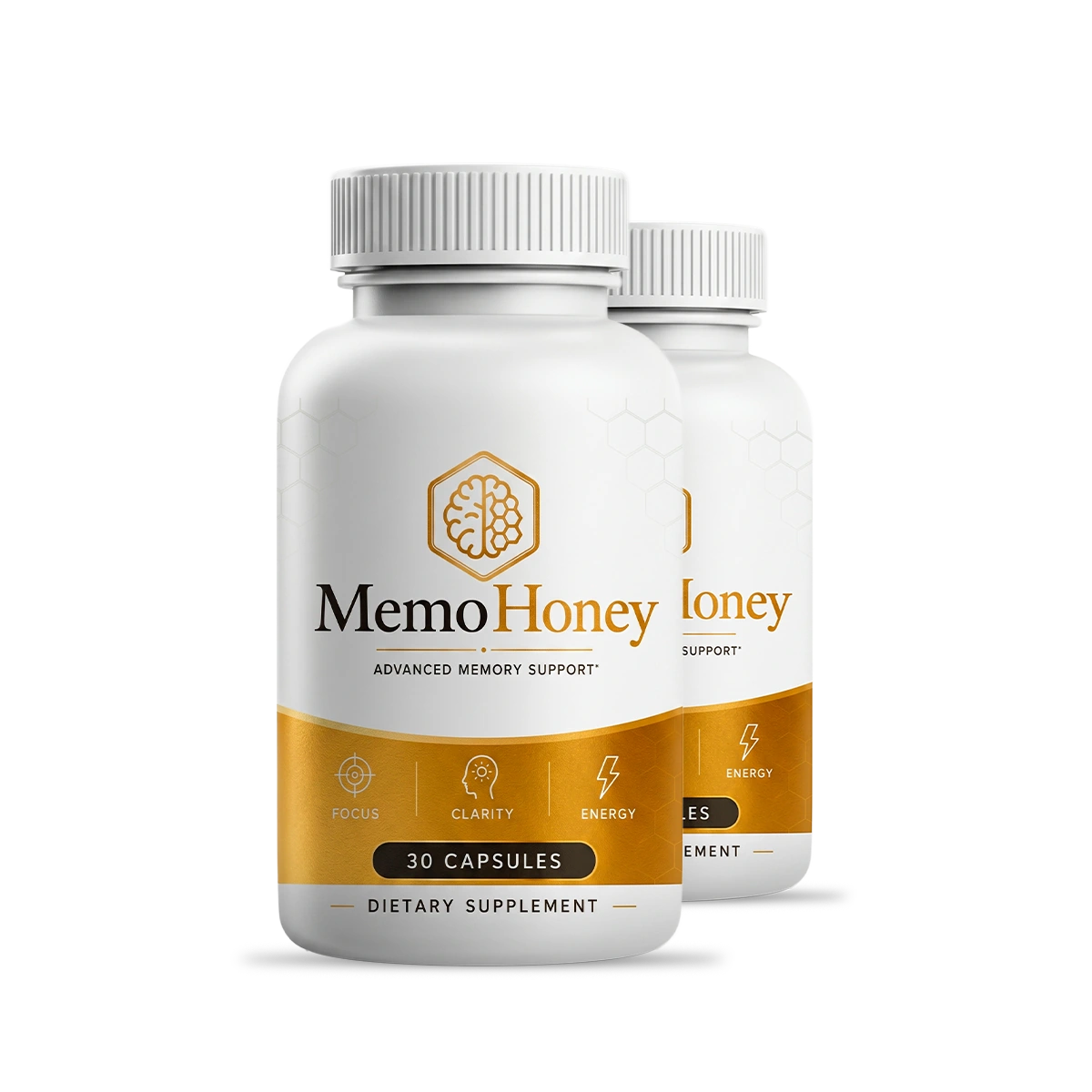
On this product the gap is easy to see. The bottle prints a brand, the phrase Advanced Memory Support, three words on a gold band, a capsule count and the words Dietary Supplement. The seller's page names five supports, each a full sentence about cognition, oxidative stress, neural communication, long-term brain health and neurotransmitter production. Same product, two registers.
What follows is information about a dietary supplement and not advice about anybody's health. Forgetfulness somebody else has remarked on, or a decline that is visibly steeper this month than last, is a reason to book an appointment rather than to read further. MedlinePlus lists what is worth mentioning when you do.
Why the container is the careful one
The label is the regulated surface. It is the thing that physically accompanies the product into a buyer's house, it is what an inspector would pick up, and the space on it is small enough that every phrase has had to earn its place.
It is also written once and printed thousands of times. A sales page can be edited on a Tuesday afternoon; artwork has to go back to a printer. That asymmetry alone makes labels conservative, quite apart from the regulatory reasons, and it is why the bottle is generally the better guide to what a company is prepared to stand behind.
The claim categories matter here too, and the FDA's own explanation of them is a page worth four minutes. A supplement may say it supports the normal working of a body system. It may not say it treats, prevents or cures a disease. Advanced Memory Support is the first kind. Nothing on this container is the second.
Why the sales page is the broad one
A sales page is written to answer the question a visitor arrived with, and the question is almost never what does this support. It is will this help me. So the copy moves toward the outcome, and the legal ceiling is the only thing stopping it.
What that produces is a particular style of sentence: broad, mechanistic and carefully verbed. Support overall cognitive health. Improve mental clarity. Promote better brain performance. Each names a plausible mechanism, each stays on the right side of the line, and none of them is checkable, because nothing in them is a measurable quantity.
This website quotes all five of them in full on the benefits page rather than paraphrasing, for a simple reason: a quotation can be checked against the source and a paraphrase cannot. Readers deserve to see what was actually written.
| Surface | Who writes it | What governs it | How often it changes |
|---|---|---|---|
| The container | The manufacturer | Labelling rules and the cost of a print run | Rarely, and never quickly |
| The sales page | The seller or its copywriter | The claim categories, and how close to the line the seller is willing to go | Whenever somebody wants |
| The marketing graphics | A designer, from a brief | Almost nothing, beyond the same claim ceiling | Per campaign |
| A retail counter like this one | The retailer | The same claim ceiling, plus whatever discipline it sets itself | On correction, with the review date moved |
Four surfaces, one product. The first is the most conservative and the last is the only one that will tell you what it cannot check.
How to read the gap between them
Three habits, and they work on any product in this category.
Start at the container and treat it as the floor. Whatever the bottle claims, the company is prepared to print permanently. If your own complaint is not somewhere on that label, the sales page is unlikely to change the outcome.
Then read the page for what it adds and ask what would make each addition false. A claim about supporting a system is a claim about a mechanism, and mechanisms are cheap: almost everything supports something. A claim with a quantity in it is a different animal, because a quantity can be wrong.
And notice which surface carries the numbers. On this product the container carries exactly one, the count of thirty capsules. The seller's page carries prices and a guarantee. Neither carries a milligram figure for any ingredient, because the supplied artwork contains no Supplement Facts panel at all, which is the single most consequential fact about this label and the subject of its own article on this blog.
Read the MemoHoney label with this beside you
Six named ingredients, the amount each published trial used printed next to them, and 60 days from the date of purchase to decide.
Two bottles $158 · six bottles $294 · 60-day money-back guarantee
Take Me To The MemoHoney CheckoutRun MEM-26/ME-5895 · a single capsule each morning · thirty in every bottle · posted within the U.S.
The surface almost nobody thinks about
There is a fourth writer in this chain and it is the one you are reading. A retail counter sits between the manufacturer and the buyer, and it can do one of two things with the gap described above.
It can widen it, which is the ordinary commercial move. Take the seller's five supports, warm them up another few degrees, add a testimonial and a countdown timer, and the page converts better. Nothing illegal need happen for a reader to come away with a much stronger impression than the container would have given them.
Or it can narrow it, which is what this website tries to do. Quote the claims rather than improve them. Print what each ingredient's own trials used next to the ingredient. Say which numbers belong to a distributor and which belong to a journal. Name the emblem that identifies nobody. State the things that cannot be checked, in a list, on the about page.
Whether that is worth doing commercially is somebody else's question. It is the only version of a retail page that a reader can use.
The same product, read on four surfaces
It is easier to see the pattern with one claim followed across all four. Take memory, which is what this product is sold for.
The container says Advanced Memory Support. Four words, a structure and function claim, and nothing about degree, speed or mechanism.
The sales page says enhance memory function and support overall cognitive health. Twice the length, a verb that implies improvement, and a second clause broadening from memory to cognition generally.
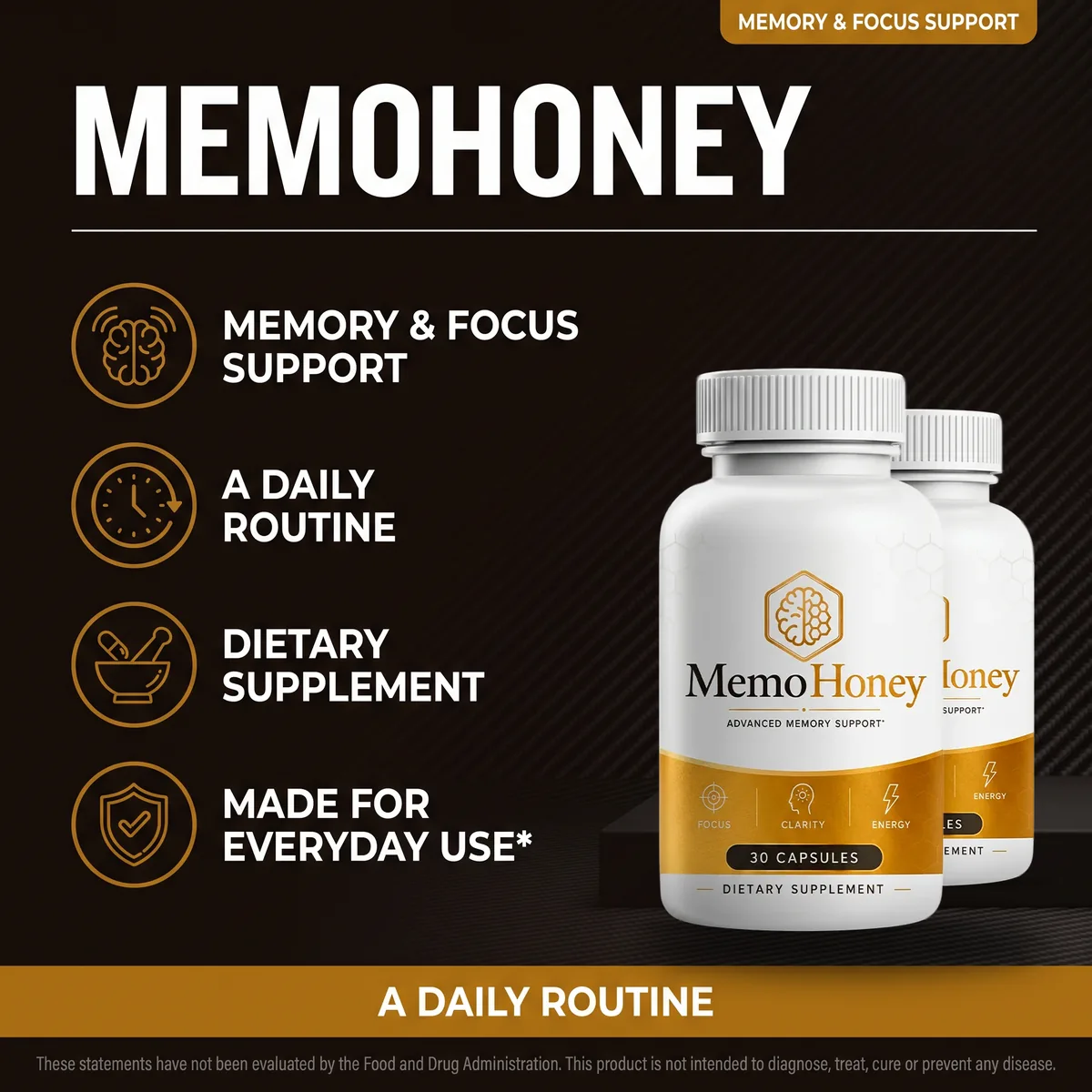
The listing graphic says Memory Focus Support in display type over a photograph, because a graphic has no room for a clause and every word has to work at thumbnail size.
And this counter says the bottle is sold for memory, clarity and focus, that no trial of it exists, that five of its six ingredients come out of blood-pressure and exercise research, and that the amounts those trials used are printed beside each name. That is the longest of the four and the only one that tells a reader what is not known.
None of the first three is false. They are progressively less qualified, which is what happens as a claim travels from a printer's plate toward a scroll.
- The container is the floor: what the company will print permanently.
- The sales page is the ceiling: what the claim rules allow it to say.
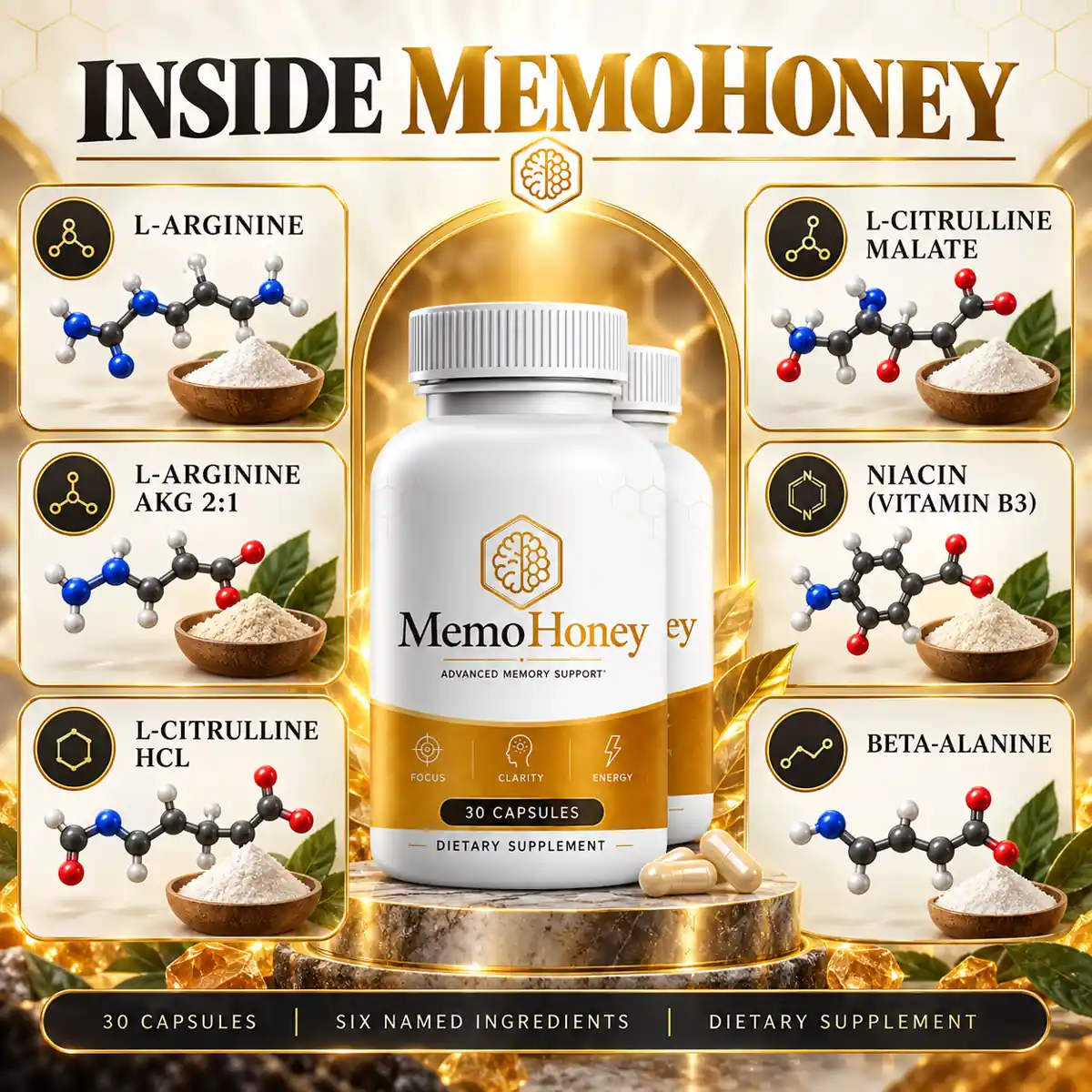
- The graphics are marketing, and on this product they are also the source of the ingredient list.
- A retail counter chooses which of the two it moves toward.
- Any sentence with a quantity in it is more checkable than any sentence without one.
Read the bottle, then read the page
In that order, and the second reading will be a more sceptical one. That is the whole technique and it takes about a minute.
The bottle in front of this desk says Advanced Memory Support and prints Focus, Clarity and Energy across a gold band. It names six ingredients on a companion graphic and gives an amount for none of them. It is a modest container and a legal one, and everything more exciting than that was written by somebody with a page to fill.
Which is not an accusation. It is how this business works, and the reader who knows it is in a considerably better position than the one who does not.
- Agency page: Questions and Answers on Dietary Supplements, issued by U.S. Food and Drug Administration [www.fda.gov]
- Agency page: Using Dietary Supplements Wisely, issued by National Center for Complementary and Integrative Health, National Institutes of Health [www.nccih.nih.gov]
- Agency page: Memory, issued by MedlinePlus, U.S. National Library of Medicine [medlineplus.gov]
- Read for this counter: The unapproved drug centrophenoxine (meclofenoxate) in cognitive enhancement dietary supplements, as reported by Cohen PA, Avula B, Khan I in Clin Toxicol (Phila), 2022;60(10):1156-1158 [PubMed 35959800]