MemoHoney Official Website › Articles › Reading labels
Reading labelsMemoHoney Ingredients List: What a Supplement Facts Panel Would Have to Say
The MemoHoney ingredients list is six names on the vendor's own tile graphic: L-Arginine, L-Arginine AKG 2:1, L-Citrulline HCL, L-Citrulline Malate, Niacin (vitamin B3) and Beta-Alanine. The supplied artwork carries no Supplement Facts panel, so no milligram amount is printed for any of them. This article walks through what a panel would show and what each field would settle for this capsule.
The box on the back that is not there
Nearly every supplement in an American cupboard carries a small ruled box on the back of the label headed Supplement Facts. It is dull, it is crowded, and it is the single most informative thing on the container.
The artwork supplied with this product does not include one. What the vendor ships is a front-of-bottle shot, a six-tile graphic naming the ingredients, four listing scenes, nine circular marks and a five-up strip, and not one of them prints a serving size, a milligram figure or a percent Daily Value.
So this article does the next most useful thing available: it walks through what a panel contains, field by field, and says what each field would settle for this particular bottle. It is also, incidentally, a guide to reading the panel on any other supplement you own.
What follows is information about a dietary supplement and not advice about anybody's health. Forgetfulness somebody else has remarked on, or a decline that is visibly steeper this month than last, is a reason to book an appointment rather than to read further. MedlinePlus lists what is worth mentioning when you do.
Serving size, and why it comes first
The first line of a panel says how much of the product one serving is: one capsule, two capsules, a scoop, a tablespoon. Everything underneath it is per serving, which makes this line the multiplier for the entire box.
It is also the line most often used to flatter a formula. A panel showing impressive amounts per serving, where a serving is four capsules and the bottle holds sixty, is a fifteen-day bottle being sold as a month. Checking the serving size against the capsule count against the price is a thirty-second calculation that changes the answer surprisingly often.
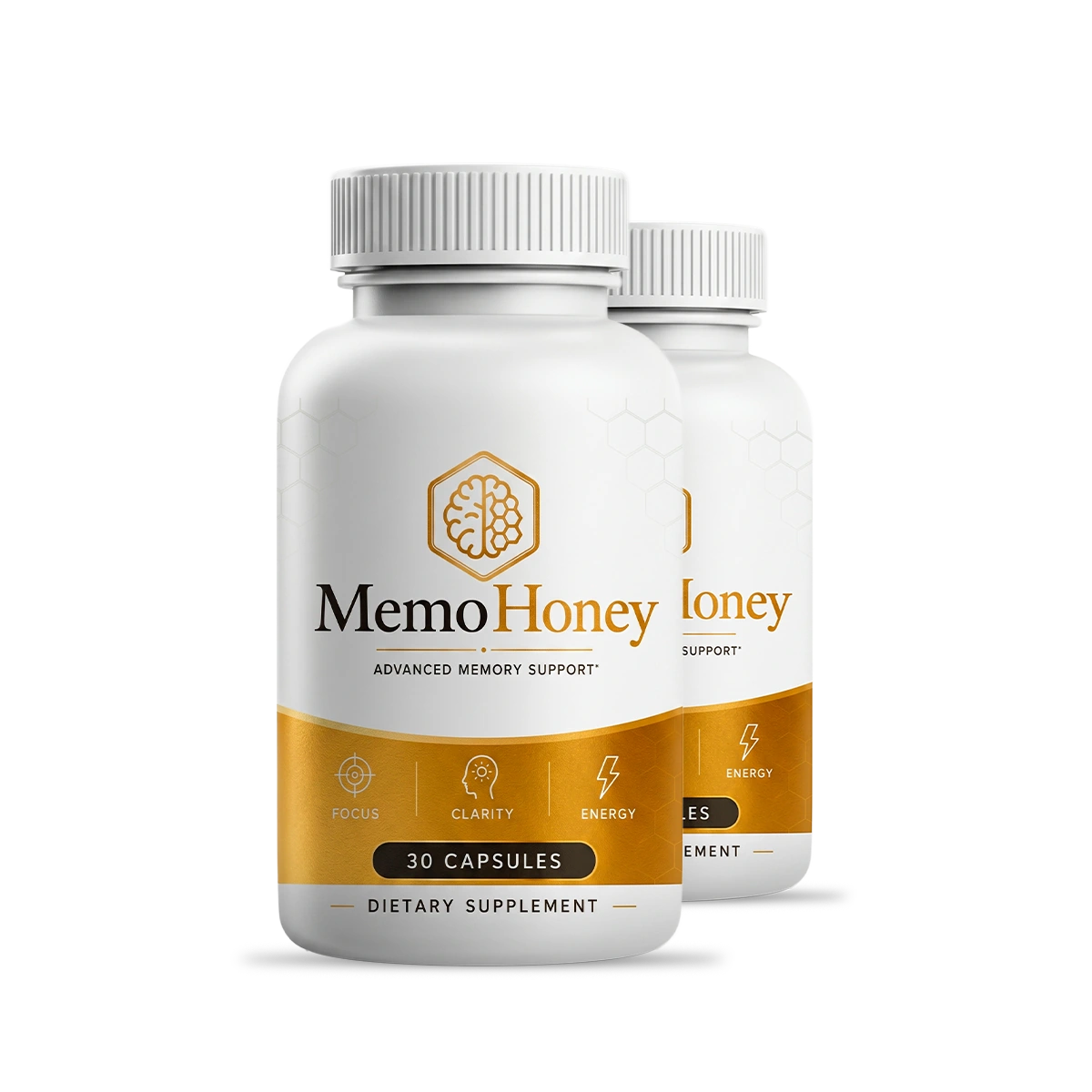
On this product the front of the bottle tells us the serving indirectly and unusually clearly: the label directs one capsule daily and the bottle holds thirty, so a serving is one capsule and a bottle is a month. That much is settled without a panel, and it is the only quantity on the container.
| Panel field | What it tells you | What it would settle here |
|---|---|---|
| Serving size | How much product one serving is | Already known: one capsule, thirty to a bottle |
| Servings per container | How long a bottle lasts | Already known: thirty |
| Amount per serving | Milligrams of each named ingredient | Everything. This is the field this website works around not having |
| Percent Daily Value | How the amount compares with a reference intake | Applies to niacin only, the one ingredient here with a reference intake |
| Other ingredients | Fillers, flow agents and the capsule shell itself | Whether the shell is gelatin, which only the vegetarian emblem hints at |
| Allergen statement | Declared allergens present or handled on the line | What the gluten and milk emblems assert, in testable words |
Six fields. Two are already answered by the front of the bottle, and the other four are the reason a panel matters.
Amount per serving, the field that matters
This is the one. A column of milligram figures beside the ingredient names is what turns a list into a formula, and its absence is what makes every dosage discussion on this website an exercise in reasoning rather than reading.
With it, comparing this product against the published literature would take a minute. The citrulline trial that measured blood flow to the head gave 8.8 g a day for five days. The arginine AKG pharmacokinetic trial gave 12 g a day split three ways. The beta-alanine imaging trial in 60 to 80-year-olds gave 2.4 g a day for twelve weeks. A panel would say where this capsule sits against each of those, and the answer would be a fact rather than an inference.
Without it, the honest position is the one the comparison table takes: print what each trial used, print that the label states no amount, and decline to estimate. An estimate would be more satisfying and it would be a number this desk invented.
One thing a panel would not settle is worth saying. A declared amount is a declaration, not an assay. A survey of over-the-counter niacin preparations assayed what was actually in them and found the free nicotinic acid content varied considerably between products. A panel is a claim about contents; a certificate of analysis is a measurement of them.
Percent Daily Value, and why only one line would have it
The percent Daily Value column compares an amount against a reference intake set for the general population. It exists for vitamins and minerals, because those have reference intakes, and it does not exist for amino acids, because they do not.
On this formula that means exactly one of the six names would carry a figure in that column: niacin. The others would show an asterisk and a footnote saying no daily value established, which is what every amino acid on every panel shows.
The niacin line would still be the most informative single row on the box. There is a published ceiling to compare it against: the systematic review behind the tolerable upper intake level settled it at 35 mg a day from supplements. A figure under that is unremarkable; a figure at or above it would be a reason to read the NIH fact sheet on niacin before starting, and to expect flushing.
Read the MemoHoney label with this beside you
Six named ingredients, the amount each published trial used printed next to them, and 60 days from the date of purchase to decide.
Two bottles $158 · six bottles $294 · 60-day money-back guarantee
Take Me To The MemoHoney CheckoutRun MEM-26/ME-5895 · a single capsule each morning · thirty in every bottle · posted within the U.S.
Other ingredients, the line nobody reads
Underneath the ruled box sits a short unruled line beginning Other Ingredients. It lists everything in the capsule that is not an active: the shell material, fillers such as rice flour or microcrystalline cellulose, flow agents such as magnesium stearate, and anything else present.
For most readers it is the least interesting line on the label. For some it is the only line that matters, and this product is a good example of why.
The shell is the case in point. The supplied artwork never names the capsule material, so a reader who avoids gelatin has nothing to go on except the vegetarian emblem, which covers the fill and the shell together and is therefore carrying the entire decision on its own. An other-ingredients line would say hypromellose or gelatin in one word and settle it.
The same line would clarify the gluten and dairy emblems, which are currently assertions without a testable form. The testing and quality page goes through every mark on the container and what each of them is actually claiming.
- Serving size is the multiplier for the whole panel, and the field most often used to flatter a formula.
- Amount per serving is the field that turns a list into a formula.
- Percent Daily Value applies to vitamins and minerals, so one line here would carry it.
- Other ingredients names the shell, which is the only thing that settles the gelatin question.
- A declared amount is a claim; an assay is a measurement, and they are not the same thing.

What to do when a panel is missing
- Do not estimate. A number you made up is worse than an empty column, because it looks like information.
- Find the trial amounts for each named ingredient and write them down. That is a real number, attached to a real population.
- Work out what the container can physically hold. A capsule is a hard limit and the arithmetic is available to anybody.
- Ask the seller for the panel or the certificate of analysis. It costs an email and the answer is informative either way.
- Decide what the residue is worth to you, knowing that it is a residue.
One legible photograph of the back of the bottle. A serving size, a milligram column and an other-ingredients line would settle in a single image what several careful pages on this website approach from outside. The request has gone to the seller and it will be published the day it arrives.
The dullest box on the label
A Supplement Facts panel is six fields of small type that nobody reads for pleasure, and it is worth more than every emblem, adjective and photograph on the container put together.
Two of its six fields are already answered by the front of this bottle. The other four are open, and the most important of them is the one that would put a number beside each of six ingredient names. Until that exists, this website prints the amounts the trials used and leaves the label's column as the seller left it.
Which is the honest position rather than a satisfying one, and it is the same position any reader can take with any bottle whose back panel is missing.
- Read for this counter: The effects of L-citrulline supplementation on cerebrovascular function during sprint interval training in taekwondo athletes, as reported by Li A, Li H, Chen J in J Exerc Sci Fit, 2025;23(3):222-228 [PubMed 40474881]
- Read for this counter: Pharmacokinetics, safety, and effects on exercise performance of L-arginine alpha-ketoglutarate in trained adult men, as reported by Campbell B and team in Nutrition, 2006;22(9):872-81 [PubMed 16928472]
- Read for this counter: β-Alanine supplementation improves fractional anisotropy scores in the hippocampus and amygdala in 60-80-year-old men and women, as reported by Ostfeld I and team in Exp Gerontol, 2024;194:112513 [PubMed 38971131]
- Read for this counter: Definition of a tolerable upper intake level of niacin: a systematic review and meta-analysis of the dose-dependent effects of nicotinamide and nicotinic acid supplementation, as reported by Minto C and team in Nutr Rev, 2017;75(6):471-490 [PubMed 28541582]
- Read for this counter: Varying cost and free nicotinic acid content in over-the-counter niacin preparations for dyslipidemia, as reported by Meyers CD and team in Ann Intern Med, 2003;139(12):996-1002 [PubMed 14678919]
- Agency page: Niacin: Fact Sheet for Health Professionals, issued by Office of Dietary Supplements, National Institutes of Health [ods.od.nih.gov]
- Agency page: Questions and Answers on Dietary Supplements, issued by U.S. Food and Drug Administration [www.fda.gov]