MemoHoney Official Website › Choosing A Memory Supplement
Choosing A Memory SupplementChoosing A Memory Supplement: Seven Questions, In Order
Ask them in this order and most of the shelf answers itself before you reach the price.
What is it for. What is in it. How much of each. What was that amount studied at. Who was studied. What does the seller promise about money. And what would change your mind. Each question below carries the answer this bottle gives.
A method rather than a recommendation. It works on a competitor's label exactly as well as it works on this one, which is the test of whether a buying guide is worth reading.
1. What is it actually for?
Your complaint first, the container second, and the sales page a distant third.
Start with your own complaint rather than with the product. Names arriving late is a different problem from losing the thread of a paragraph, and both are different from an afternoon that falls apart at three o'clock. A shelf full of products called memory support treats all three as one thing.
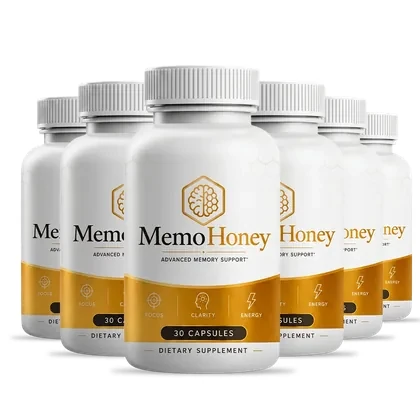
Then read what the bottle claims, as opposed to what the page claims. The container is the regulated surface and it is almost always more restrained. On this one the front says Advanced Memory Support and a gold band spaces out Focus, Clarity and Energy; the sales page names five broader supports, which are quoted in full on the benefits page.
If your complaint is not on the bottle, the product is not for you, whatever the page says. That single move eliminates more of this shelf than any other question in this list.
2. What is in it, and is the list complete?
Names or a blend, and what the names imply about what the formula thinks the problem is.
A full list of named ingredients is the minimum, and a surprising share of this shelf does not clear it. The phrase to be wary of is proprietary blend, which names a set of ingredients and a single combined weight, and tells you nothing about the ratio between them.
This bottle clears that bar. Six names are tiled on the vendor's own graphic: two citrullines, two arginines, niacin and beta-alanine. Nothing is hidden inside a blend and nothing is described only by its effect.
Read the list for what it implies about approach rather than for length. Four nitric-oxide substrates mean a blood-flow formula. Ginkgo and bacopa mean a botanical one. Citicoline and phosphatidylserine mean a phospholipid one. Three different theories of what is wrong, and a buyer is usually better served by choosing the theory before choosing the brand.
3. How much of each ingredient is in it?
The question that sorts this shelf fastest, and what to do when the label cannot answer it.
This is the question that separates labels, and it is the question this particular artwork cannot answer. There is no Supplement Facts panel in the supplied material, so no milligram figure exists for any of the six and this website estimates none.
On a label that does carry a panel, three things are worth reading: the serving size, which tells you how many capsules the amounts refer to; the amount per serving for each named ingredient; and the percent Daily Value where one exists, which only applies to vitamins and minerals.
The arithmetic trick worth knowing is capacity. A double-zero capsule holds roughly 700 to 900 mg of powder in total. If a label names eight ingredients whose trials were run at grams each, they are not all at trial amounts, and no panel is needed to know it. That reasoning is the whole of the dosage comparison on this website, and it is available to any reader holding any bottle.
4. What amount was that ingredient actually studied at?
Find the trial amount before the label amount, and the comparison does itself.
An ingredient name on a label is an invitation to go and read about it, and the first number to find is not the one on the bottle. It is the one in the trial.
The gap is frequently enormous and it is rarely mentioned. Citrulline's cerebrovascular result came from 8.8 g a day for five days. The arginine AKG pharmacokinetic work used 12 g a day. Beta-alanine's imaging result in older adults came from 2.4 g a day for twelve weeks. Those are scoops, not capsules.
Niacin is the counter-example worth holding onto, because it shows the question is fair rather than rhetorical. Its useful amounts are milligrams and its supplemental upper intake level is 35 mg, which fits inside a capsule with room to spare. Vitamins and minerals generally do. Amino acids generally do not.
5. Who was studied, and were they anything like you?
Three things to read in any abstract, and why the population decides how far a result travels.
The least-asked question on this list and one of the most useful. A result in twenty-two trained athletes during sprint intervals is a real result and it is not a result about a fifty-five-year-old wondering where they left their keys.
Three things to check in any abstract: the number of participants, their age and health, and how long the trial ran. A twelve-person crossover over four days and a multi-year randomised trial in three thousand older adults are both studies, and they are not the same kind of evidence.
The field's own history is instructive here. The Ginkgo Evaluation of Memory trial followed more than three thousand older adults for a median 6.1 years and found no reduction in dementia, after decades of smaller and more encouraging studies. Big trials in the right population change answers, which is exactly why the population matters.
6. What is promised about the money?
Three details inside a refund window, and the subtraction nobody publishes.
A refund window is the one part of a supplement offer that is enforceable, so read it as carefully as the ingredient list. Three details decide whether it is real.
From when is it counted. Purchase and delivery can be a fortnight apart, and a window counted from purchase is shorter. This counter prints the conservative reading, which is sixty days from the date of purchase.
What conditions attach. A use clause is the common one, and this seller asks for thirty days of use before a claim. Sixty minus thirty is the number that actually matters, and very few pages do that subtraction in public.
And who pays the postage back. Here the buyer does, on a successful claim as well as an unsuccessful one, which is ordinary in this business and worth knowing before rather than after. The whole calendar is worked through on the guarantee page.
7. What would change your mind?
The only question on this list that is about the buyer rather than the bottle.
Decide before you start, because deciding afterwards is how sixty days turn into a story rather than an answer. Write down three specific things you are watching and how you will know whether they moved.
Then decide what would make you stop. A fortnight of nothing is not it, on a product whose own distributor says buyers wait three to six weeks. A month of nothing measured against something written down on day one probably is. An unexpected reaction certainly is, and so is a new prescription for a nitrate or a blood-pressure medicine.
This last question is the one that turns a purchase into a test. It costs one minute on day one, it is free, and it is the only part of this whole list that the buyer controls entirely.
What is my actual complaint. What is named on the bottle. How much of each. What amount was studied. In whom. What is promised about the money. And what would change my mind. Any product on this shelf can be run through that list in ten minutes.
Sources and method behind this guide
Seven sources under this guide, each linked at the claim it supports.
- Li A, Li H, Chen J. The effects of L-citrulline supplementation on cerebrovascular function during sprint interval training in taekwondo athletes. J Exerc Sci Fit. 2025;23(3):222-228. PMID 40474881. https://pubmed.ncbi.nlm.nih.gov/40474881/
- Campbell B, Roberts M, Kerksick C, et al. Pharmacokinetics, safety, and effects on exercise performance of L-arginine alpha-ketoglutarate in trained adult men. Nutrition. 2006;22(9):872-81. PMID 16928472. https://pubmed.ncbi.nlm.nih.gov/16928472/
- Ostfeld I, Zamir A, Ben-Zeev T, et al. β-Alanine supplementation improves fractional anisotropy scores in the hippocampus and amygdala in 60-80-year-old men and women. Exp Gerontol. 2024;194:112513. PMID 38971131. https://pubmed.ncbi.nlm.nih.gov/38971131/
- Minto C, Vecchio MG, Lamprecht M, et al. Definition of a tolerable upper intake level of niacin: a systematic review and meta-analysis of the dose-dependent effects of nicotinamide and nicotinic acid supplementation. Nutr Rev. 2017;75(6):471-490. PMID 28541582. https://pubmed.ncbi.nlm.nih.gov/28541582/
- DeKosky ST, Williamson JD, Fitzpatrick AL, et al. Ginkgo biloba for prevention of dementia: a randomized controlled trial. JAMA. 2008;300(19):2253-62. PMID 19017911. https://pubmed.ncbi.nlm.nih.gov/19017911/
- Using Dietary Supplements Wisely. National Center for Complementary and Integrative Health, National Institutes of Health. https://www.nccih.nih.gov/health/using-dietary-supplements-wisely
- Questions and Answers on Dietary Supplements. U.S. Food and Drug Administration. https://www.fda.gov/food/information-consumers-using-dietary-supplements/questions-and-answers-dietary-supplements