MemoHoney Official Website › Articles › Research
ResearchMemo Honey Research: What the Studies on Each Ingredient Looked At
The research behind Memo Honey is research on its six ingredients, one at a time. Arginine, citrulline and beta-alanine come mostly from blood-flow and exercise science, niacin from nutrition studies, and one beta-alanine trial used brain imaging in adults aged 60 to 80. The finished MemoHoney capsule has not yet been tested as a whole.
What "Memo Honey research" really means
When people search for Memo Honey research, they usually want to know one thing: is there science behind it? The fair answer has two parts. The six ingredients each have a published body of research. The finished MemoHoney capsule, with all six together, has not been put through its own trial.
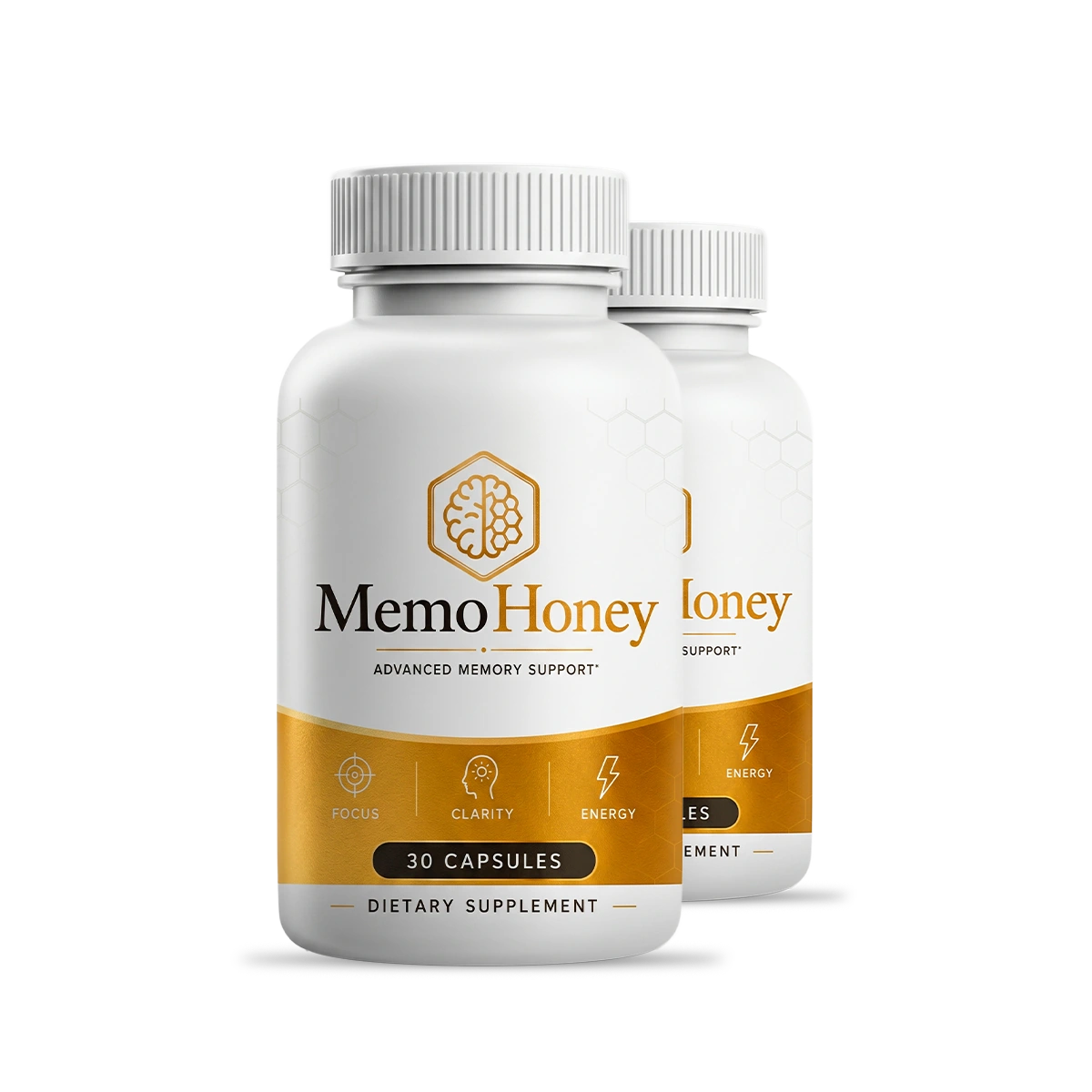
The label names L-Arginine, L-Arginine AKG 2:1 Extract, L-Citrulline HCL, L-Citrulline Malate, Niacin (vitamin B3) and Beta-Alanine. They read best as three groups. Two arginines and two citrullines feed the body's nitric oxide pathway. Beta-alanine builds carnosine, which is found in muscle and also in brain tissue. Niacin is a B vitamin that the body turns into NAD and NADP, which help cells make energy. This page walks through what the studies on each group looked at.
MemoHoney research at a glance
| Ingredient | Where the research sits | What those studies gave people |
|---|---|---|
| L-Arginine | Blood pressure, blood vessel function and exercise capacity | Gram amounts in every supplement trial |
| L-Arginine AKG 2:1 | Resistance training and forearm blood flow in trained young men | Twelve grams a day, as three doses of four |
| L-Citrulline HCL | Blood flow to the head during hard interval exercise | 8.8 grams a day for five days |
| L-Citrulline Malate | Repeated sprints, resistance training, and leg function in older women | 8 grams a day for three days; 3 grams a day for six weeks with training |
| Niacin (B3) | A long-running diet study and an observational B-vitamin study | Milligrams; the supplemental upper level is 35 mg a day |
| Beta-Alanine | Exercise capacity, plus one brain-imaging trial in adults aged 60 to 80 | 2.4 grams a day for twelve weeks in the imaging trial |
Each row is a study of one ingredient, not a study of MemoHoney. Full detail and links to each study are on the ingredients page.
The arginine and citrulline research behind MemoHoney
Arginine is the amino acid the body uses to make nitric oxide. Nitric oxide is a short-lived gas that tells the muscle around a blood vessel to relax, so the vessel widens. That is why arginine research sits in blood pressure, blood vessel function and exercise.
Arginine has a known weak spot. When swallowed, enzymes in the gut wall and the liver break down much of it before it is used. The AKG form pairs arginine with alpha-ketoglutarate to try to get more of it through. That was tested at twelve grams a day, with mixed results.
Citrulline is the clever part of the formula. The enzymes that break down arginine leave citrulline alone. It arrives whole and is turned into arginine later in the body. Blood arginine rises within hours of an oral citrulline dose. That is why citrulline has its own research, and why MemoHoney names it twice. The malate form is the one most often used in sprint and strength studies. The HCL form appears in the only study that measured blood flow to the head, in taekwondo athletes during hard intervals. Our citrulline article tells that story in full.
The beta-alanine research
Beta-alanine is one of two building blocks of carnosine, and it is the one the body is usually short of. So adding beta-alanine is what raises carnosine. Carnosine buffers acid in working muscle, which is why most beta-alanine research is about exercise. Across the pooled exercise studies, people took 3.2 to 6.4 grams a day.
The link to memory comes from one trial. Adults aged 60 to 80 took 2.4 grams of beta-alanine a day for twelve weeks, and the researchers used brain imaging to look at the hippocampus, a part of the brain tied to memory. It is the thread that connects this ingredient to a memory label. Carnosine builds slowly, so this is also why the MemoHoney routine is measured in weeks, not days.
The niacin research
Niacin is the one ingredient here measured in milligrams. Neurons are busy cells and rely heavily on the energy machinery that niacin supports. Long-term severe shortage causes a condition described historically by three symptoms, the third of them affecting thinking. The research on niacin and the brain comes from a long-running diet study and an observational B-vitamin study.
Diets supply somewhere in the low tens of milligrams a day, and the supplemental upper level in the U.S. is 35 mg a day. Niacin is the one ingredient whose useful amount fits easily inside a capsule of this size.
How to read Memo Honey research fairly
Ingredient research is useful, and it is worth knowing its limits. Three simple points help.
- Check the amount. Most of these studies used grams. A standard capsule holds roughly 700 to 900 mg of powder in total, shared between six ingredients. The label does not print an amount for each one.
- Check who took part. Many studies were in athletes or trained young men. The beta-alanine imaging trial is the one in older adults.
- Check what was measured. Blood flow, sprint power and brain scans are different things from day-to-day memory.
Read that way, the picture is balanced. MemoHoney is built from well-studied ingredients with a clear idea behind the pairing. The capsule as a whole is untested rather than disproved. The best test available to you is your own: one capsule each morning, a note on day one, and a check at day 30 and day 60. Our fair 60-day test article shows how, and the how it works page explains the formula idea in more depth.
Questions people ask about Memo Honey research
Is there research on Memo Honey?
There is published research on each of its six ingredients. The finished MemoHoney capsule, with all six together, has not yet had its own trial.
Which MemoHoney ingredient has research in older adults?
Beta-alanine. One trial gave adults aged 60 to 80 a daily 2.4 grams for twelve weeks and used brain imaging to look at the hippocampus.
Why does Memo Honey use citrulline as well as arginine?
Swallowed arginine is largely broken down before use, while citrulline passes through and is turned into arginine later in the body.
Read the MemoHoney label with the research beside you
Six named ingredients, one capsule each morning, thirty in every bottle, and 60 days from the date of purchase to decide.
Two bottles $158 · six bottles $294 · 60-day money-back guarantee
Take Me To The MemoHoney CheckoutRun MEM-26/ME-5895 · a single capsule each morning · thirty in every bottle · posted within the U.S.
- Each of the six ingredients has its own published research.
- Arginine and citrulline: blood flow and exercise. Beta-alanine: exercise plus one brain-imaging trial in adults 60 to 80.
- Most studies used grams; the capsule holds less than a gram in total.
- The finished capsule has not had its own trial yet, so your own 60-day record matters.
This article is information about a dietary supplement and not advice about anybody's health. A change in memory that you or your family have noticed is a reason to book an appointment first. MedlinePlus lists what is worth mentioning when you do.
- Agency page: Questions and Answers on Dietary Supplements, issued by U.S. Food and Drug Administration [www.fda.gov]
- Agency page: Using Dietary Supplements Wisely, issued by National Center for Complementary and Integrative Health, National Institutes of Health [www.nccih.nih.gov]
- Agency page: Memory, issued by MedlinePlus, U.S. National Library of Medicine [medlineplus.gov]